In a lengthy and dramatic public comment period at Tuesday's Pinellas County Commission meetng, 22 citizens attended to defend the county's voter-approved law that limits commissioners to eight years in office.
To watch the comments, click here.
As four commissioners were elected in 2000 and are currently serving in violation of the law, most of the speakers explicitly asked the ineligible commissioners to resign. All four commissioners reacted with stony silence.
Thursday, July 26, 2012


Thursday, May 10, 2012
Florida Supremes uphold constitutionality of county term limits

The decision was expected, but nonetheless it is great news that instantly sweeps the state clean of sham lawsuits (Polk) and deceitful repeal referenda (Sarasota) from desperate politicians trying to cling to power.
The most startling aspect of the decision is that the court not only affirmed the existing right of charter counties to enact term limits, but also receded from a prior decision that denied counties the right to term limit constitutional officers such as the supervisor of elections and tax collector.
The decision affects the 20 Florida counties that have adopted "home rule" charters. These include the biggest counties, such as Hillsborough, Palm Beach, Broward and Miami-Dade. In these counties, citizens are allowed -- via referenda -- to customize their county governments. Ten of the 20 have chosen to enact term limits on their county commissions.
Politicians naturally chafed under the restriction and sued or otherwise tried to thwart the people's term limits in several counties, most notably Broward and Sarasota. In Sarasota, the most egregious case, politicians had successfully used the courts to keep term limits at bay but in all other cases the limits were in place and enforced.
However, when Broward tried to follow Sarasota's lead in convincing a friendly local judge to shoot down the voter-approved term limits, Broward County stood up for its voters and appealed. The lower court judges in Sarasota and then Broward argued that a split 2002 decision, Cook, in which the Florida Supreme Court denied the constitutionality of term limits for constitutional officers, should also apply to county commission term limits. However, in reviewing the Broward case, Telli, the 4th District Court of Appeals unanimously rejected this claim. Commissioners are different than constitutional officers, they said, and singling out term limits as off limits is a prohibited limitation of home rule.
When the Florida Supreme Court took the case, they also took up the Sarasota controversy (Antunes) at the same time. By the time it got there, both Sarasota and Broward lawyers to their credit were arguing on the side of the people over their own local politicians.
Yesterday, the Supreme Court decided that not only was the 4th DCA essentially correct, but they receded unanimously from the earlier split (4-3) decision in Cook. As a result, terms limits on both county commissioners and constitutional officers are officially Constitutional in the state of Florida.
Of the three justices who has participated in the 2002 Cook decision, Barbara Pariente and R. Fred Lewis reversed their earlier votes. Justice Peggy Quince was a dissenter in 2002 and had signed on to the ultimately persuasive 2002 dissent by Harry Lee Anstead.
Interestingly, James Rowlee -- a senior assistant attorney in the Broward County Attorney's Office -- had suggested to me as early as February 2011 that this would be the end game. He felt Broward County's argument was correct and that whether or not Broward prevailed at the 4th District Court of Appeals level, it was prepared to go all the way to the Supreme Court where, he was convinced, Broward's term limit law would prevail -- and even that Cook might get struck down as a result.
Outside lawyers who reviewed the case concurred that the people would prevail as long as the case made it all the way to Tallahassee. That is why I was not surprised, but no less pleased, by yesterday's decision.
Broward's Joni Armstrong Coffey, Andrew Meyers and Benjamin Salzillo also deserve great credit for their efforts on behalf of voters. Over in Sarasota, kudos also to Andrea Mogensen and her paralegal Micheal Barfield, who took their local citizen revolt all the way to the Supreme Court. And thank you for the Supremes themselves who had the integrity to review its own earlier decision and revise it to better accord with the Florida Constitution and the will of the people.
Thursday, March 1, 2012
Florida officially calls on U.S. Congress to pass term limits amendment!
 The Florida legislature today officially called on the U.S. Congress to pass and send to the states for ratification a constitutional amendment limiting Congressional terms in office.
The resolution, passed by acclamation in both houses of the Florida legislature, will be sent to the president of the United States, Speaker of the U.S. House, president of the U.S. Senate and each member of the Florida Congressional delegation.
Florida is the first state to take this step, but it will not be the last. With term limits polling at all-time highs and the Congress at record lows, pressure is building around the nation for Congress to take action.
Sen. Jim DeMint and Rep. David Schweikert have introduced a constitutional amendment (SJR 11 and HJR 71, respectively) limiting congressional terms in the Senate and House. While the Florida action does not specifically mention any specific legislative proposal, they are the first state to go on record in the past decade supporting a congressional term limitation constitutional amendment. Voters overwhelmingly supported Florida’s state constitutional limits on state legislators in 1992 with 77 percent support. Polling from Quinnipiac University in 2009 suggests 82 percent of Floridians continue to support term limits on public officials.
Nationally, the support for term limits remains strong with 78 percent of Americans supporting congressional term limits according to a September 2010 poll conducted for FoxNews by Public Opinion Dynamics. Support is strong across partisan lines with 84 percent of Republicans favoring the idea while 74 percent of Democrats and 74 percent of Independents also support limiting congressional terms.
Passage of the term limits constitutional amendment requires a two-thirds vote in the House and Senate and ratification by three-quarters (38) of the states in order to become part of the Constitution. The states are the easy part. The trick is getting through the U.S. Congress and this official call from a important state like Florida is a big help.
The Florida resolution was introduced by State Rep. Matt Caldwell (HM83) in the Florida House and Sen. Joe Negron (SM672) in the Senate.
"The evidence is in. Term limits work,” said Rep. Matt Caldwell of Lehigh Acres. "New York, Illinois and Florida have all been faced with tough decisions on how to balance their state budgets over the last few years. Only one of these states has term limits and only one of these states has cut their budgets to match their revenues and refused to raise taxes."
"Congress is on a collision course with federal bankruptcy and our last, best hope is to bring serious and permanent change to Washington, D.C.," he said.
Special thanks to Rep. Caldwell, Sen. Joe Negron, the Campaign for Liberty and grass roots lobbyist John Hallman for their work in getting this done!
Wednesday, February 29, 2012
Congressional term limits memorial passes Florida House!
 Rep. Matt Caldwell's memorial that calls on Florida's Congressional delegation to pass federal term limits has passed the Florida House today!
Grass roots lobbyist John Hallman, who has helped shepherd the bill through Tallahassee, reports Sen. Joe Negron's version of the bill is headed to the Senate floor imminently and expects it too will pass.
Sunday, February 26, 2012
House votes to protect county term limits from litigious local pols

Hopefully, this bill won't be necessary. But just in case, Rep. John Wood (R-Winter Haven)'s bill to make the constitutionality of county term limits explicit unanimously passed the Florida House on Feb. 23.
First, a recap: Of the 20 home rule counties in Florida, voters in 10 have approved term limits over the last 15 years. Politicians have tried every trick in the book the get around the voter-approved reforms but to little avail.*
In August of last year the 4th District Court of Appeals -- the highest court in the state ever to look at the issue -- decided unanimously and unabiguously that county commission term limits are indeed constitutional. The politicians only have one last chance of overturning the will of voters, the Supreme Court of Florida, which has accepted their appeal of the 4th DCA decision. The decision is imminent.
Fortunately, every indication is that the court will rule with the people, affirming the unanimous 4th DCA decision as well as all the hundreds of thousands petitions and votes of the people.
But what if the court surprises us?
While unlikely, it is always good to have a backup plan. Fortunately, we do.
Bills in both houses of the Florida legislature that would explicitly make county term limits constitutional have passed their initial subcommittee hurdles and are moving toward the floor for a vote.
If the bills pass the legislature, the voters will have the opportunity at the ballot box in November to overturn the Supreme Court's ruling, and who can doubt they will?
(PICTURED: Rep. John Wood, R-Winter Haven)
* Corrupt officials in Sarasota County are so far refusing to enforce their voter-approved term limits, but all nine other counties are.
Tuesday, February 21, 2012
Would-be Florida Senator Connie Mack IV joins incumbent in opposition to Congressional term limits
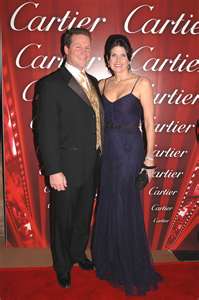 It is hardly a shock. A professional politician from a political family who is not only a Congress member but is married to one, U.S. Rep. Connie Mack IV (R-Cape Coral) came out strongly against Congressional term limits on Monday.
He was making a campaign stop at the Republican Club of the Northern Palm Beaches and in response to a question made it clear he -- unlike his two competitors for the Republican U.S. Senate nomination -- would not be supporting Sen. Jim DeMint's term limits amendment bill if elected.
"The people who are now in control in the legislature are the staff who are not accountable to the members and not accountable to the voters," he said of Florida's experience with term limits. "I think what we need to do is hold people accountable who run for office. We term them out."
Reports are these cliches felt flat with the crowd. Indeed, the previous day Rep. Mack landed dead last in the straw poll held by the Florida Federation of Republican Women in Tallahassee.
He shares his anti-term limits position with the incumbent he is running against, Sen. Bill Nelson. Whereas both of his challengers for the nomination -- George LeMieux and Mike McCalister -- have signed the U.S. Term Limits Congressional pledge to cosponsor and vote for genuine 3/2 Congressional term limits as represented by the DeMint bill. Florida's current Republican Sen. Marco Rubio is a cosponsor.
In taking this position, Rep. Mack is putting his own self interest above that of the people, 79 percent of which tell pollsters they support term limits. It is funny that he criticizes the Florida legislature -- which enjoy competitive elections and regular rotation in office -- as unaccountable while endorsing the status quo in Washington DC where incumbents running for reelection win just under 95 percent of the time and have since 1970.
"We term them out," indeed. Between uncontested races, nominal challengers and the natural advantages of incumbency, the U.S. Congress is by no means competitive, accessible nor accountable and Rep. Mack knows it -- and likes it that way!
(Pictured: U.S. Reps Connie IV and Mary Bono Mack out on the town.)
Monday, February 20, 2012
Sen. J.D. Alexander sees term limit glass half full

"Thankfully for term limits there's a graceful way to get off the horse." -- Florida Sen. J.D. Alexander in the Tampa Bay Times, 2/19/12.
Subscribe to:
Posts (Atom)